
The biggest EGCA Champions League season of all time kicks off with the Qualification Stage played in Odivelas, Portugal from 20th to 22nd February. The tournament is organized by Clube Atlético e Cultural in cooperation with the European Goalball Club Association.
Eight teams from seven different countries will compete in the Odivelas Qualification Stage. The top three teams of the tournament will advance to the season’s culminating Final Stage, which will be played in Berlin in mid-September. Below is an introduction to each team’s starting point for the tournament by group.
The match schedule, results and statistics, team rosters, and officiating referees can be found on the tournament’s official website.
Matches can be followed with English commentary via the GoalballTV YouTube channel. Commentary will be provided by Christoph Scholtz, Ana Margarida Capral, and EGCA President Erkki Miinala. Below are the daily links:
Friday, February 20, 2026 – Morning Session
Friday, February 20, 2026 – Evening Session
Saturday, February 21, 2026 – Full Day
Sunday, February 22, 2026 – Full Day
HOW THE TOURNAMENT IS PLAYED
The eight teams are divided into two preliminary groups of four teams each. During Friday, the teams play a single round-robin within their group, after which they are ranked for the quarterfinals. A team earns 3 points for a win, 1 point for a draw, and 0 points for a loss in a preliminary group game. The ranking of teams in a preliminary group is determined by the following system:
A. Earned points
B. Goal difference
C. Goals conceded
D. If two teams remain tied after criteria A–C, priority is given to the team that won the head-to-head match between them
E. If two teams remain tied after criteria A–D, an extra throw competition is organized between those teams to determine their ranking
In Saturday’s quarterfinals, the winner of one group faces the fourth-placed team of the other group, and the runner-up faces the third-placed team of the opposite group. The winners of the quarterfinals advance to the semifinals and medal matches, while the losers play for places 5–8.
The winners of the semifinals advance to the final and at the same time secure their place at the Final Stage in Berlin. The winner of the bronze medal match will also earn a place at the Final Stage. Placings beyond the top three are also important, as they determine the teams’ ranking in the Champions League, which provides a pathway to qualify for the EGCA European Cup later in the autumn.
In the quarterfinals, semifinals, medal matches, and placement matches, each game is played to a decisive result. If the match is tied after regulation time, a 6-minute golden goal overtime is played (the first team to score wins). If the game remains tied after overtime, an extra throws competition is used to determine the winner.
GROUP A
FC Porto
FC Porto is the only team in the Odivelas tournament with experience of playing at the Champions League Final Stage. Last season, the team hosted the Final Stage and finished ninth in the tournament. The reigning Portuguese champion’s biggest star — and also the leading player of the Portuguese national team — is #3 Fabio Oliveira, who has already scored an impressive 178 Champions League goals in his career. FC Porto will once again rely heavily on Oliveira’s scoring, but they will also need more attacking support and top-level defensive performances in the knockout matches if Pedro Filipe’s squad is to reach the Final Stage for the second consecutive year.
ASD Omero Bergamo
ASD Omero Bergamo celebrated its eighth consecutive Italian championship last weekend and now aims for success on the European stage as well. Gennaro Florio, who previously competed in the Champions League as a player, has taken over coaching duties. In individual matches, Omero Bergamo can challenge anyone in Odivelas — as shown last season in the Rostock Qualification Stage, where they pushed Lithuania’s NGA Lions to overtime in the quarterfinals. Key players include offensive threat #8 Christian Belotti and defensive anchor #6 Filippo Pezzotta, both of whom also represent the Italian national team.
SSG Blista Marburg
SSG Blista Marburg, who were at 4th place in the German Goalball Bundesliga last season, also impressed in the Champions League, finishing fourth at the Rostock Qualification Stage. Stefan Weil, head coach of the German men’s national team, also leads Marburg and has several national team players in his roster. #7 Daniel Arendar has become a starter for the German men’s national team, and strong performances will be expected from him in Odivelas. The question remains: will SSG Blista Marburg’s endurance and defensive consistency be enough in Saturday’s high-pressure knockout matches?
Fen Tigers
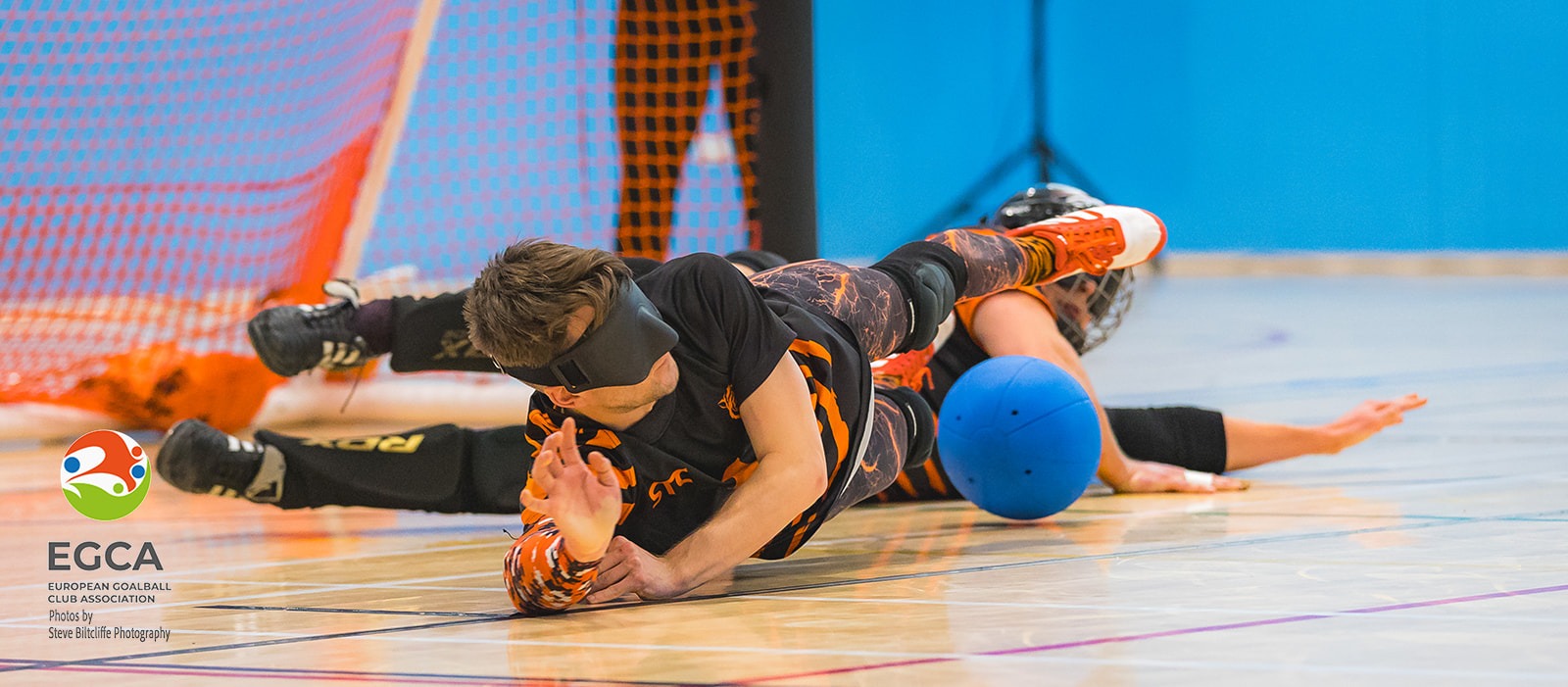
Last season left a bitter taste for Fen Tigers after disappointment in the national Super Goalball League and a missed Champions League final on home soil in Peterborough, when CSAVH Lyon defeated them in the bronze medal match. Recently, however, the team has been performing well both domestically and internationally. The three Roper brothers form the backbone of the squad. Among them, #7 Dan Roper has scored an impressive 137 Champions League goals over the past four seasons and will once again play a crucial role as Emma Evans’ team targets its first-ever Champions League final appearance. A compact team defense will also be essential in the decisive matches if that long-awaited final berth is to become reality.
GROUP B
ASCND Marseille
Marseille celebrated the French championship at the end of last season. The team features the brightest stars of the French national team, led by young standout #1 Elias Ouni, who won Champions League gold last season with Belgium’s Ha. Vi.2 Bruxelles. Ouni was the second-highest scorer of the entire Champions League season with 75 goals. It will be intriguing to see who takes on the vital center position in Marseille and whether their offensively strong players can remain disciplined and avoid attacking penalties. Under coach Neil Pwat, the team certainly has the full potential to reach the Final Stage.
FSBU Gothenburg
The reigning Swedish champion FSBU Gothenburg arguably has the youngest squad in the tournament — their oldest player, #9 Olof Ryberg, is only 25 years old. The team is full of enormous potential, already demonstrated at the EGCA Youth Championships and the November EGCA European Cup. Last season, this young side finished fifth at the Rostock Qualification Stage, but appetite grows with success, and a place at the Champions League Final Stage is undoubtedly the goal of Arvid Ryberg’s team. Olof Ryberg and #1 Felix Rosvall carry much of the scoring responsibility, while defensively #2 Alexander Smedberg — one of Europe’s most talented center players — is expected to shine once again.
BSI Copenhagen
The reigning Danish silver medalist BSI Copenhagen competed in last year’s Champions League Qualification Stage in Podgorica, Montenegro, finishing fifth. Coached by Thomas Svensson, the team heads to Odivelas as an underdog, but opponents should not underestimate this hungry Danish squad. The roster includes several young talents, such as #4 Jens Dahl, who impressed at last autumn’s Youth Championships, while experience is provided by #9 Gustav Koch Rasmussen, who has already scored an astonishing 220 Champions League goals in his career and currently ranks 12th on the all-time scoring list.
Clube Atlético e Cultural
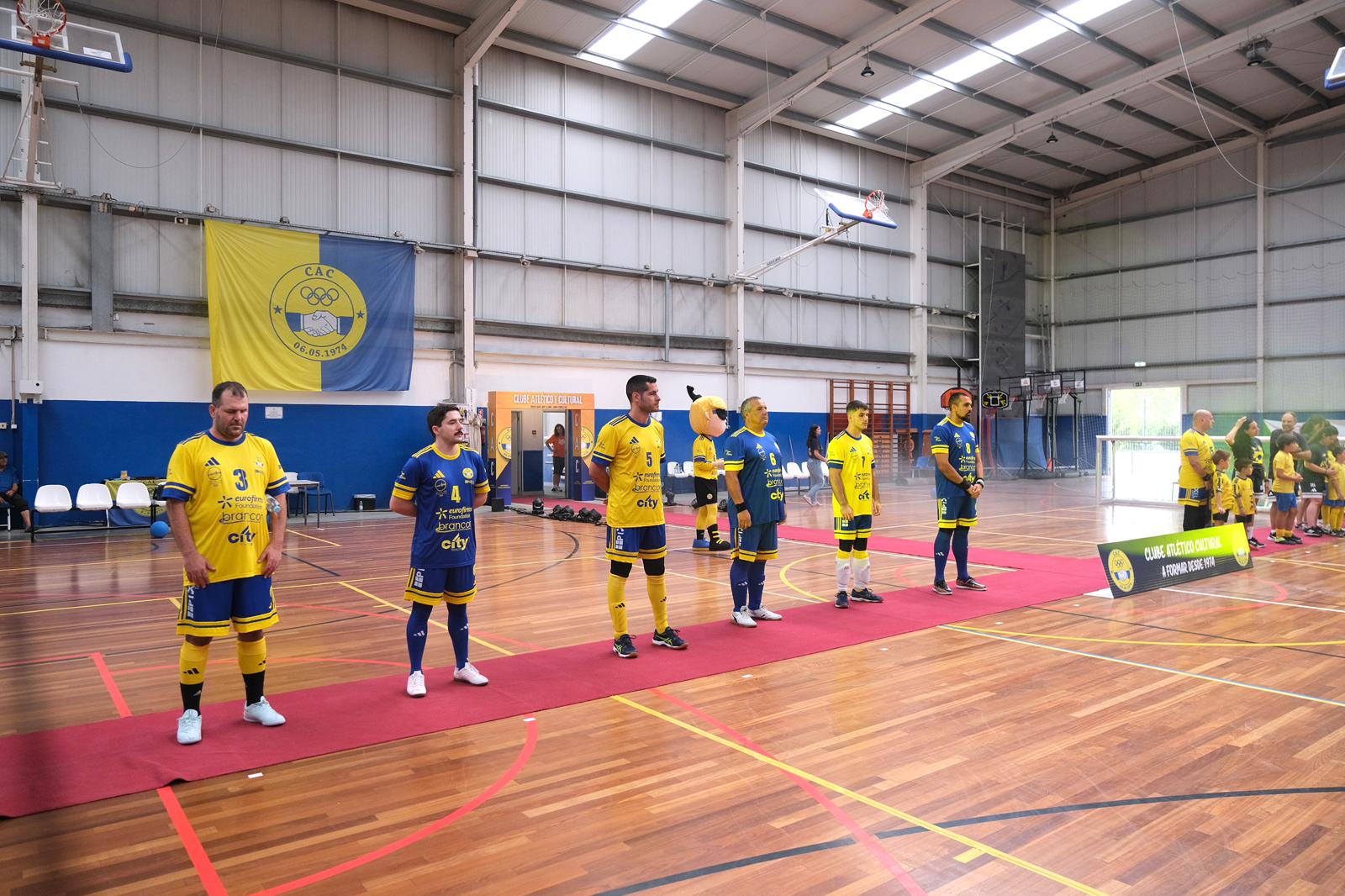
The host team of the Odivelas Qualification Stage is ready and eager to fight for a place at the Champions League Final Stage. This is the first season CAC competes in the Champions League, but under coach Beatriz Bonfim, the team has assembled a highly competitive lineup. Two-time Champions League winner with Sporting CP and scorer of 108 Champions League goals, Joao Mota, has returned to his boyhood club, significantly boosting CAC’s prospects on home soil. He will be joined by two Spaniards — long-time CAC player #8 Javi Serrato and current Spanish national team member #7 Daniel Sanchez — meaning the squad certainly has quality. The question remains whether the team is cohesive enough and can withstand the intense pressure of decisive knockout matches.